The Best Inventory Management Software for Small Businesses in 2026

Evan
Founder

If you're still tracking stock in a spreadsheet, you already know the moment this stops working: a customer orders something the sheet says you have, and the back room says otherwise. That's the entire reason inventory software exists, and in 2026 there are more options than ever claiming to fix it.
We tested, compared, and ranked the tools small businesses actually switch to this year, not the bloated enterprise platforms that show up on every "best of" list regardless of fit. Here are the top 5, with the honest pros and cons of each.
What we looked for
Before ranking anything, here's the bar each tool had to clear:
Real-time stock accuracy across every channel you sell on, not "synced every few hours"
Multi-location and multi-warehouse support that doesn't just sum numbers together
Clean integrations with the platforms small businesses actually use (Shopify, Amazon, QuickBooks, POS systems)
Pricing that makes sense at small-business scale, not enterprise pricing with a "starter" label slapped on
Setup time measured in hours, not months
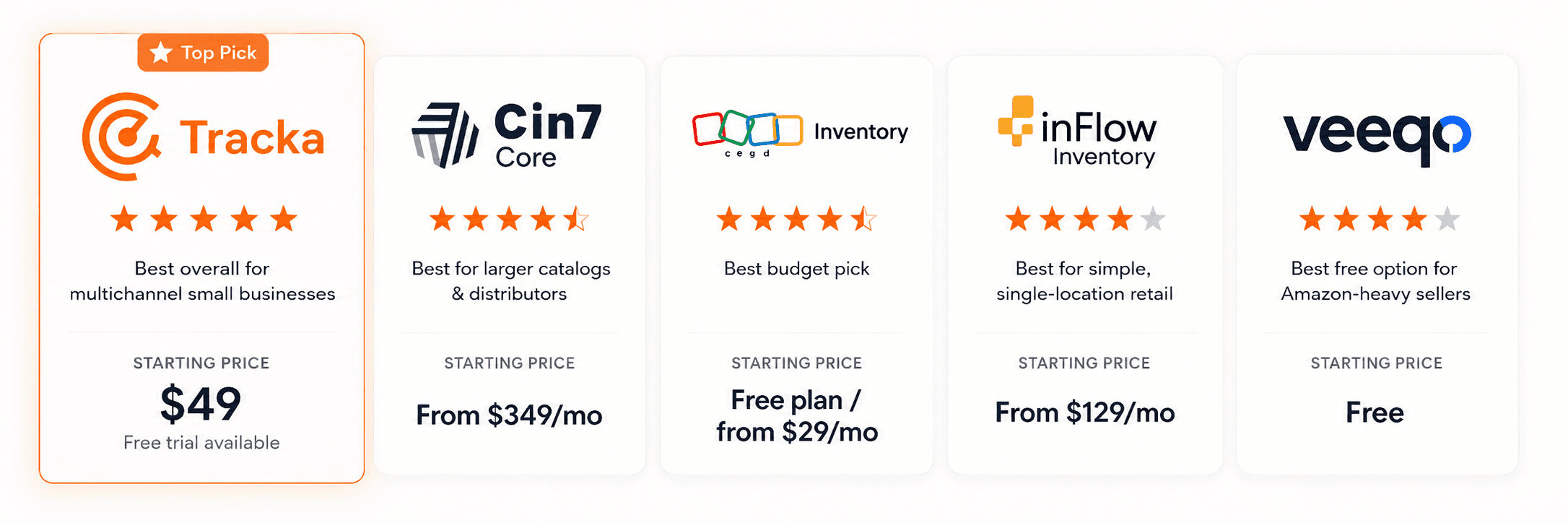
1. Tracka — best overall for multichannel small businesses
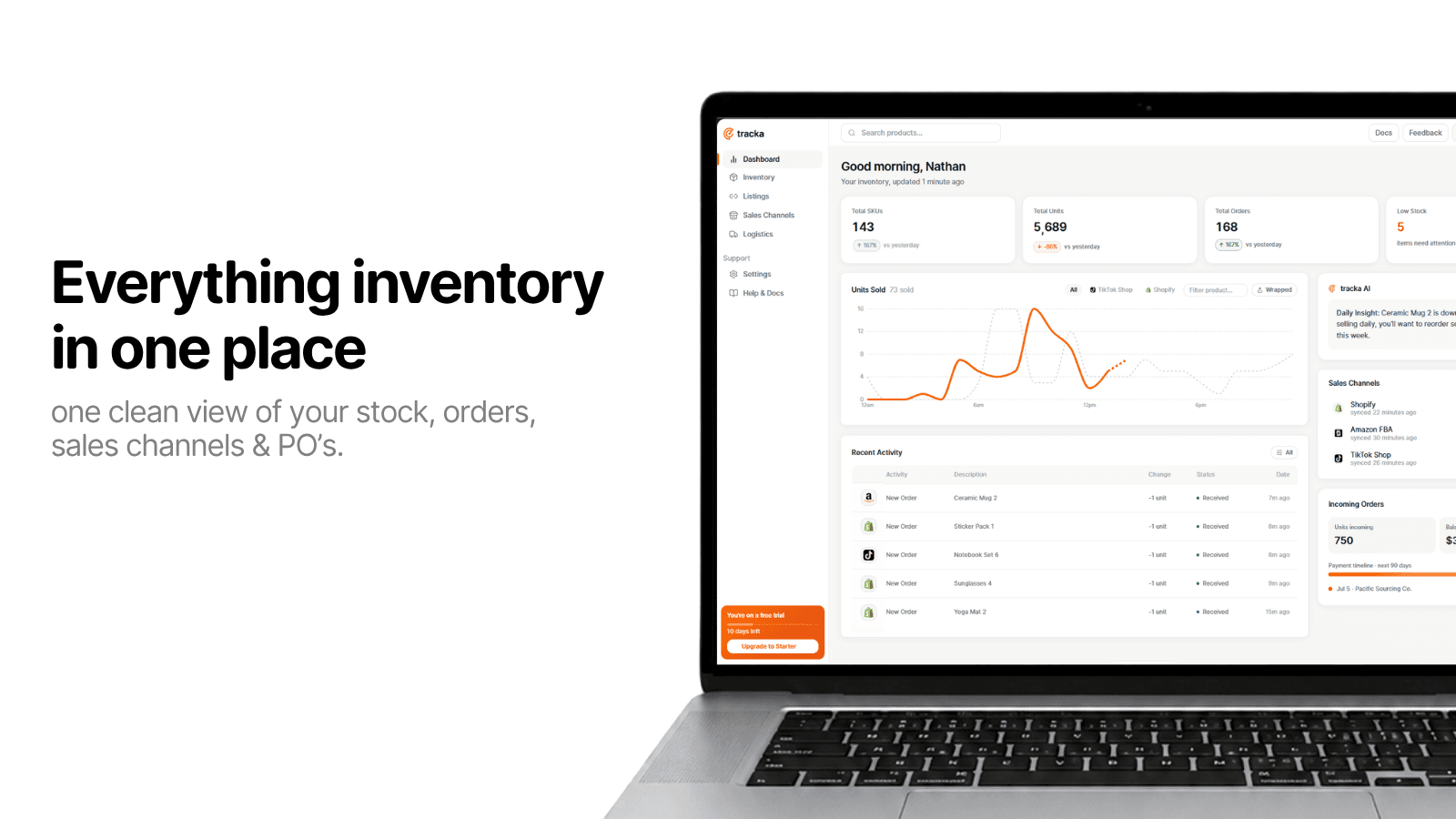
Most inventory tools were built for one channel and bolted on support for others later. Tracka was built backward from the actual problem small multichannel sellers have: stock numbers that disagree with each other.
Its core idea is simple and it's the reason it tops this list: one number is the real number, every connected channel receives from it, and no channel is ever allowed to overwrite it. Products are matched by SKU across every platform, multi-warehouse stock gets resolved correctly instead of summed into a number that doesn't exist in reality, and corrections push out automatically the moment a sale happens anywhere.
For a small business juggling a Shopify store and one or more marketplaces, that single architectural decision eliminates the single most common and most expensive failure mode in this whole category: overselling a unit you don't actually have.
Pros:
Simplest to use on the list, only gives you features you need
Built specifically to solve channel-sync accuracy, not a generic tool with sync features added on
SKU-based matching prevents the silent mismatches (casing, formatting) that break other tools
Multi-warehouse stock is resolved correctly instead of summed and overwritten
Fast setup, typically connected and syncing within an hour
Founder-operated, meaning support comes from people who actually built the sync logic
Cons:
Newer to the market than the legacy players on this list, so the integration list is still growing
Best for: Small businesses selling across two or more channels who are tired of manually correcting stock counts or have been burned by an oversell.
2. Cin7 Core — best for larger product catalogs and distributors
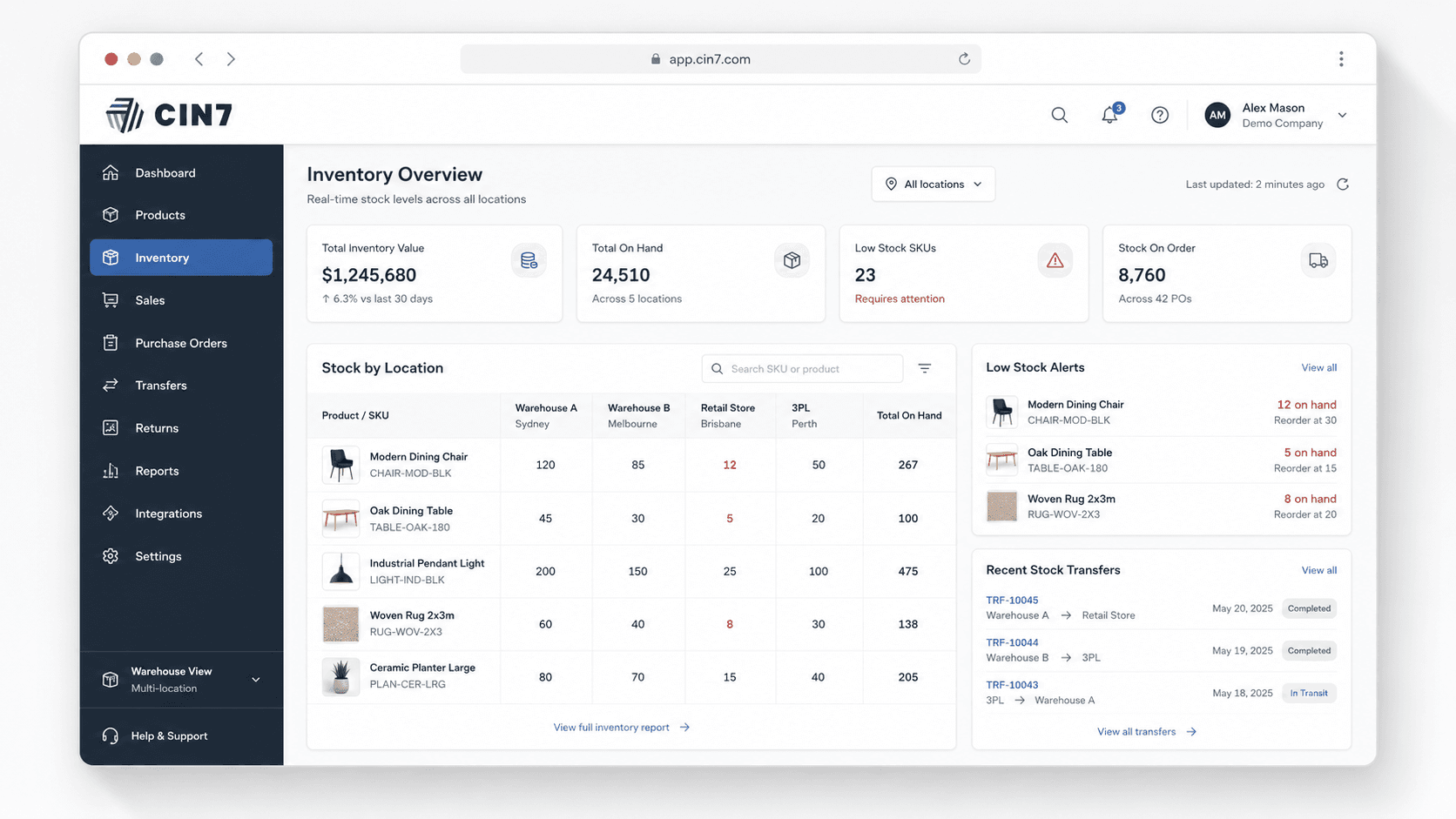
Cin7 Core is the most feature-dense tool on this list. It's built for businesses with real distribution complexity: hundreds of SKUs, multiple warehouses, B2B and B2C sales happening at once, and a need for deep reporting.
Pros:
Very wide integration library (Cin7 advertises 700+ connections)
Strong purchasing, reporting, and forecasting tools
Handles complex multi-location stock transfers well
Cons:
Customer support is a consistent weak point in user reviews
Pricing climbs fast as you add locations or registers
Contract terms are rigid, not ideal if you're still figuring out your stack
Best for: Distributors with catalogs large enough to justify the complexity.
3. Zoho Inventory — best budget pick
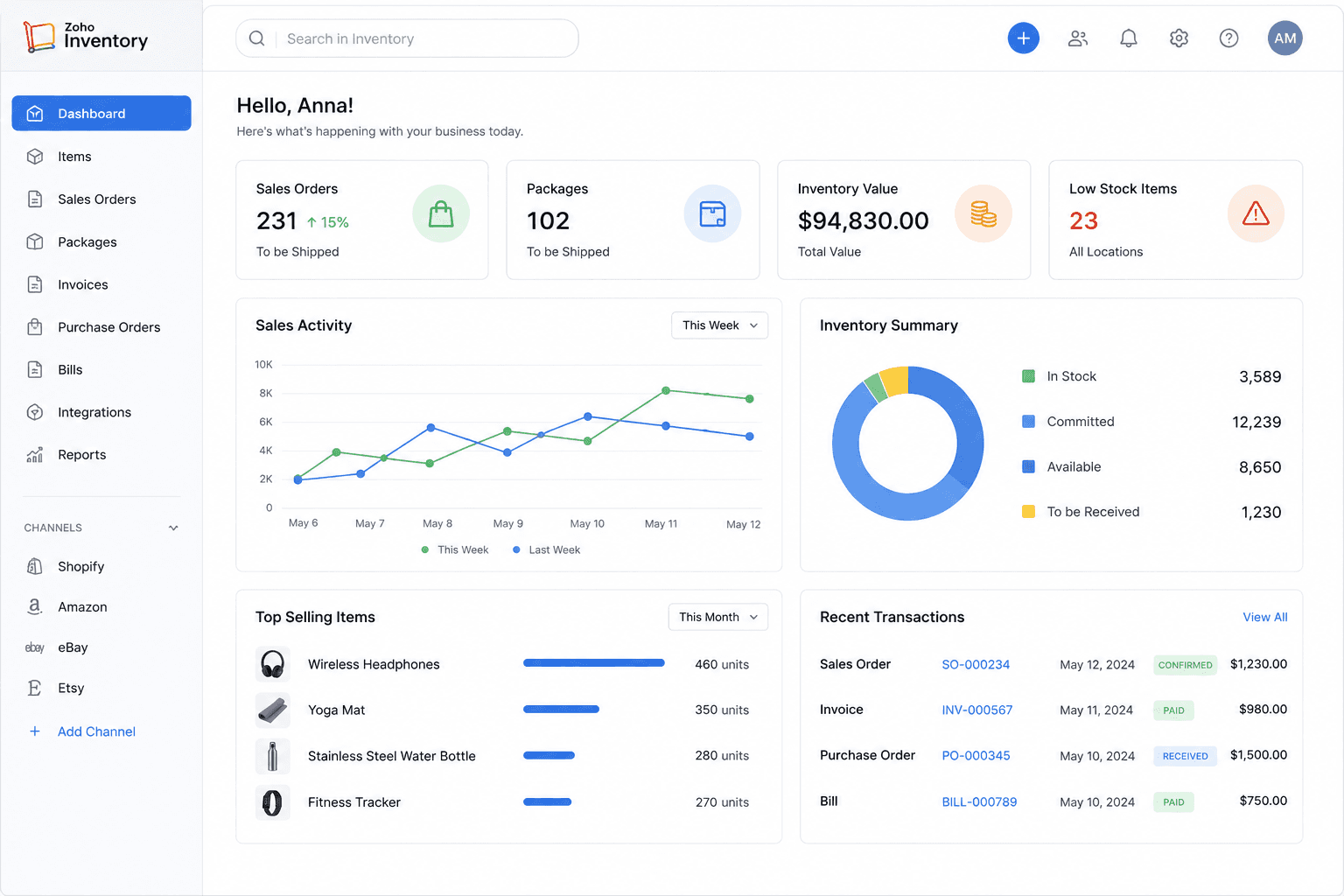
Zoho Inventory is the go-to answer whenever someone asks for an inventory tool that won't blow up their budget. It's part of the larger Zoho ecosystem, so if you're already using Zoho Books or Zoho CRM, it slots in cleanly.
Pros:
Genuinely useful free tier for very low order volumes
Affordable paid tiers once you outgrow free
Deep integration with other Zoho apps
Cons:
Forecasting and advanced analytics are noticeably weaker than higher-tier competitors
Less suited to businesses with complex multichannel sync needs as they scale
Very complex & clunky if your not tech-savvy
Best for: Budget-conscious startups and small businesses already inside the Zoho ecosystem.
4. inFlow Inventory — best for simple, single-location retail
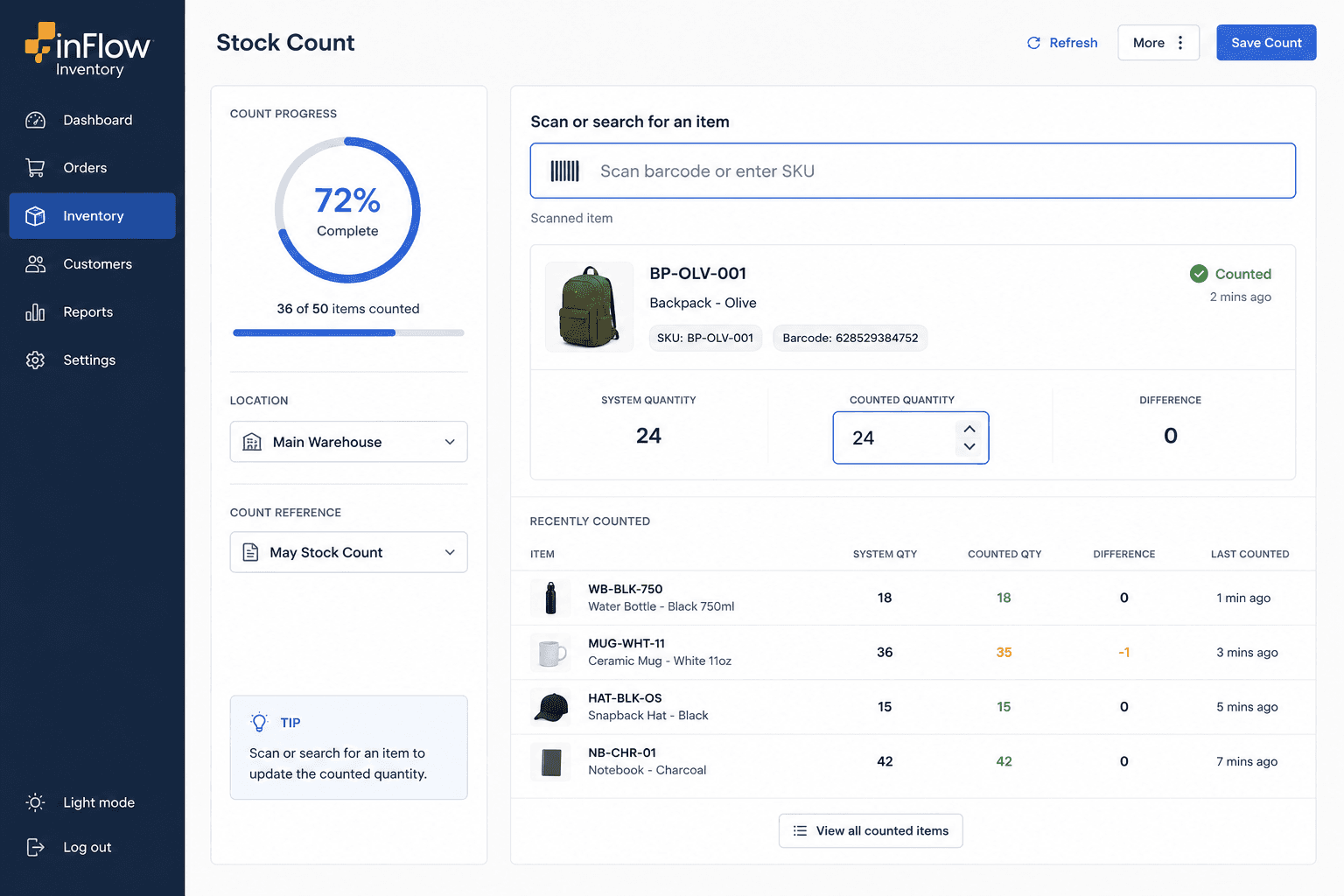
inFlow is built around simplicity. If your business has one or two locations and you want something your team can learn in an afternoon, this is one of the easiest tools to onboard on this list.
Pros:
Strong barcode scanning workflows
Solid, responsive customer support
Cons:
Scales poorly for businesses with complex multichannel selling or forecasting needs
Fewer advanced features as your catalog and channel count grow
Best for: Small retailers and distributors who want something simple now and aren't planning to scale into complex multichannel operations soon.
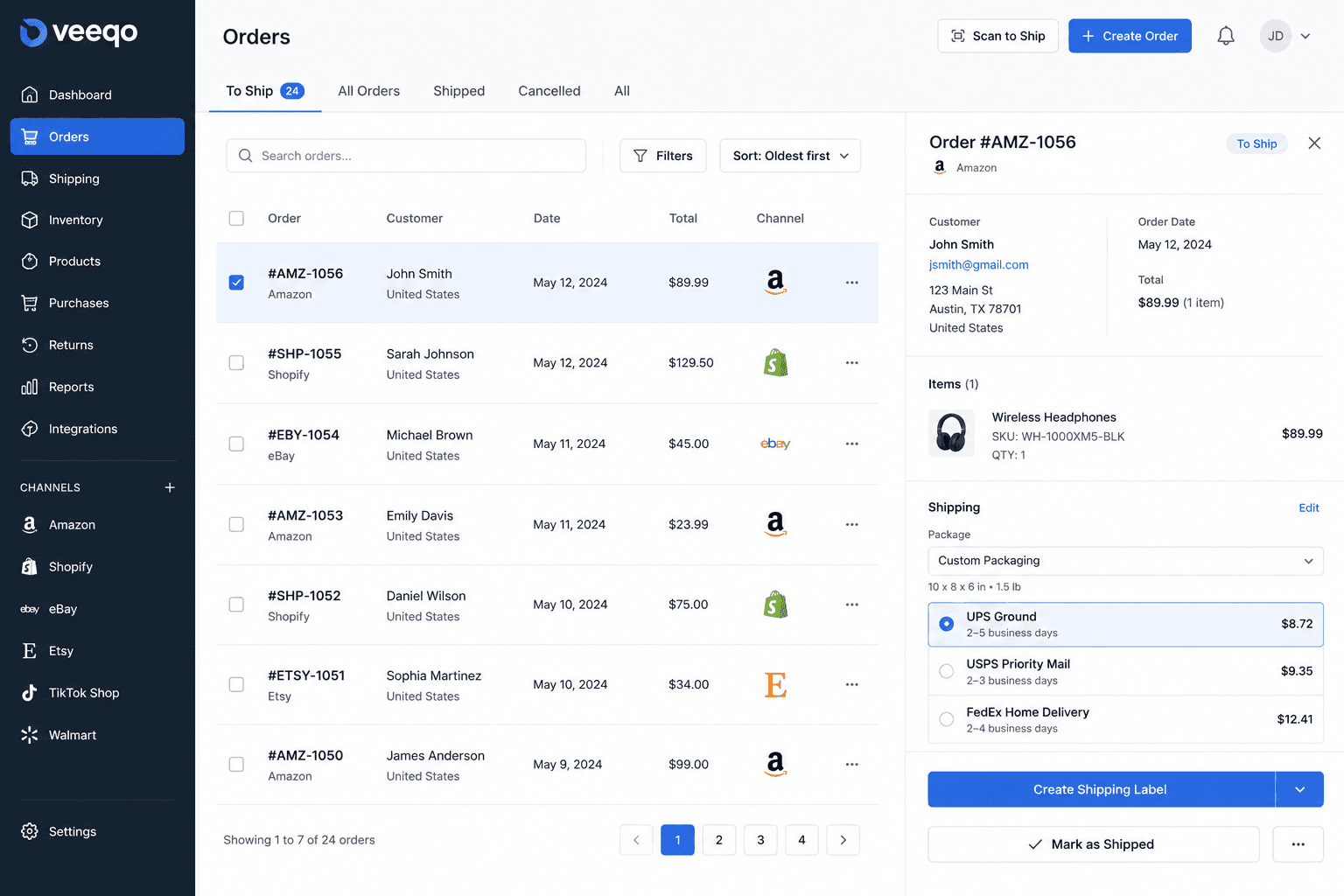
5. Veeqo — best free option for Amazon-heavy sellers
Veeqo is owned by Amazon and it shows: it's free, and it's particularly strong if a large share of your sales already happen there. It bundles inventory sync with shipping label tools, which is a nice combination for sellers who fulfill a lot of orders themselves.
Pros:
Free, with no real catch for the core feature set
Inventory sync and shipping tools live in one place
Easy starting point if Amazon is your primary channel
Cons:
Less independent than other tools on this list given the Amazon ownership
Feature depth outside of shipping and basic sync is thinner than dedicated inventory platforms
Best for: Amazon-heavy sellers who want free inventory sync bundled with shipping.
The bottom line
If you're selling on exactly one channel and don't plan to add another anytime soon, a simple tool like inFlow or a free option like Veeqo or Zoho's free tier will get you through. But the moment you're selling on two or more channels, the question stops being "which tool has the most features" and becomes "which tool keeps my stock numbers honest across all of them."
That's the problem Tracka was built to solve first, and it's why it tops this list. One source of truth, SKU-matched across every channel, with corrections pushed out automatically the second a sale happens anywhere. No more guessing which number is real.